Posts

On Disposition

Image
Natural sciences define 5 senses as: sense of taste, smell, sight, hearing and touch. But in social life one has more than these senses like:   Sense of necessity Sense of duty Sense of direction Sense of reality Sense of balance Sense of beauty Common sense Sens of sacred Tactical sense Sense of responsibility Business sense Sense of property Sense of humor Sense of limit Sense of honor and so on. This means social science has senses beyond what natural science defines. In social science this is a disposition: a tendency, a propensity, mood or inclination to act in certain ways in a given situation. These dispositions influence social interaction, life activities, human actions and thinking and the overall attitude towards life.  People acquire these senses either naturally and/or through their interaction with people. Some senses, for example sense of humor is sometimes natural, sometimes acquired in family or friends' company. Sim...

Context-Specific School Improvement Plan

Individual difference in teaching-learning is quite a common term in educational literature. It implies that students are different from each other in terms of their ability and capacity to learn and that they learn differently, hence should be taught with different teaching strategies. Teachers are encouraged to adapt to a variety of teaching strategies in order to fulfill the needs of individual student in a classroom. At a macro-level the concept of individual differences is equally applicable in terms of individual schools to improve. There are different ways of school improvement or school reform strategies. In many countries a system-wide reform is in use. In system-wide reform process, all schools are treated at the same scale and reform is planned and implemented on the bases of a uniform standard approach. In such an attempt, schools’ individual needs usually get ignored and so the intended change is either short term or no change at all.  Sometimes such a reform has...

Issues of Assessment in Board Examinations

Education is a process as well as a product. Process includes attending lectures; participating in classroom activities; presentations and actively assimilating knowledge, skills and attitude; participating in co-curricular activities and learning how to interact and live with different people. The quality of the process is judged through examination as the product. The process is as important as the product, but our educational system is more products oriented and hence students as well as parents pay more attention to the assessment/examination rather than what happens in the school. Our examination system/ Boards at intermediate level seem ineffective to assess or judge the quality of the process of education due to some serious flaws. Our typical examination papers follow a specific pattern of questions/concepts to asses year after year. So students do not bother about exams even if they start preparing for it a month earlier, still they can pass with flying colors. It also dev...

Nurturing Critical, Conscious and Responsible Citizens

Image
Education/learning is a lifelong process. Learning can take place in a formal educational setting or informal life experiences. In my view an educated individual is a responsible, conscious, motivated and a curious change agent of a society. People have the capability to become such educated individual and they are polished through the process of education and socialization. The role of teaching learning cannot be overlooked in developing a desired society where the people are responsible for their own act. Vice versa by observing the individuals of a society, one can judge the classroom teaching learning process pretty well. Teaching learning has its own unique way of bringing up such individuals who can positively contribute to the society. There are many factors involved in this process; however some very basic elements make the teaching learning process more effective than others. For example while teaching in the classroom, the teacher should know the needs of the students....

Book Review: Adhe Adhoore Khawab

Image
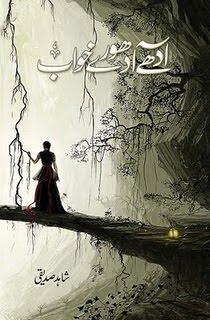
The novel ‘Adhe Adhoore Khawab’ by Dr. Shahid Siddiqui is a call at the right time for the practicality of education in the society. It is a unique attempt to use the genre of Urdu novel to deal with the themes of education, politics, and justice. The protagonist, Professor Roy, is an inspirational teacher who touches the lives of students and becomes an eternal source of motivation for them. The story opens with Professor Roy’s returning to his old city of work where he had taught in a well known education college called Professional Teacher College (PTC). He by coincidence meets Imtisal Aga, a current TPC student who is an enthusiastic girl interested in bringing a radical change through education. Imtisal belongs to a small village of the mountainous region and has come to the city for a teaching course in the same college where Professor Roy had taught. She has heard a lot about Prof Roy as a radical educationist but has never met him. The chance meeting turns into ...

Internet------ Some Useful Websites

The world had changed rapidly due to information through internet in the mid 90s. The information coming into the world of internet on daily bases is out of our imagination. In such a rapidly changing situation, it is almost impossible and hard for us to manage information that we need. The difficulty increases in our context and culture where little awareness prevails among the mass as how to get benefit from internet. The youth of our area as I see on facebook are increasingly using internet. The internet is used for different purposes such as social communication, data sharing, gaining knowledge etc. We should keep in mind some of the guidelines to use internet. It is important first to have a purpose in mind before searching through internet. Secondly while roaming from site to site we also come across some websites, that seem useful to us and we want to go to that site again and again. Such web sites are saved in the favorites which can be revisited without wasting much of our ...

“Taare Zamin Pay” – A critical analysis

Image
The film “Taare Zameen Pay” by Amir Khan has undoubtedly attracted the attention of educationists, teachers, parents, administrators and others interested in education. It is almost the first film, especially in Urdu/ Hindi speaking context, which may contribute to the educational theory and practice tremendously. A film can change the thinking, attitudes, behaviours, and practice of people much faster than any other technique. The film gives some very important messages for parents and teachers alike. The role of the parents shown in the film is a typical role existing in our society, may be in a different form. For instance most fathers believe that they are responsible for earning money and therefore the internal responsibility of the house including child development is of the wife. This is a very dangerous notion, because the children may develop an indifferent attitude towards their fathers. The film also shows a blaming attitude of the mother towards the child whe...